
Israel's 2026 Election: A Guide for Our Community
From the HBT Israeli-Palestinian Program Committee. Current as of October 7, 2026. We will update this page after official results on November 4.
- Israelis vote for parties, not a prime minister. Whoever puts together 61 of 120 seats governs.
- Polls show Netanyahu's bloc and the opposition each about 7 seats short.
- The Arab parties (about 13 seats) and a few small parties near the cutoff could decide the outcome.
- Opposition leaders disagree about whom they would partner with, so a deadlock or a repeat election is possible.
How the election works
- What's a "list"? Each party submits a ranked list of candidates. Voters pick a list, not individual people. If a list wins 10 seats, the top 10 names on it enter the Knesset. Some lists are a single party; others are two or three parties running together.
- One national vote. The whole country is a single district. Seats are divided in proportion to each list's share of the vote.
- A 3.25% cutoff. A list needs at least 3.25% of the vote, about 4 seats, to enter the Knesset. Votes for lists that fall short are effectively lost.
- No one wins alone. No party has ever won a majority by itself. The real contest is which group of parties reaches 61.
- No absentee ballots. Voters must be in Israel on election day. Only diplomats and some official staff can vote from abroad. An Israeli citizen living in Boston would have to fly home to vote.
- Citizens 18 and over. This includes Arab citizens of Israel, about a fifth of the population, and Israelis living in West Bank settlements.
- Not Palestinians in the West Bank and Gaza. They are not Israeli citizens. Most Palestinians in East Jerusalem are permanent residents, not citizens, so they can vote in city elections but not for the Knesset.
- One slip, one list. In the booth, each voter picks one paper slip for one list and seals it in an envelope. There's no voting for individual candidates.
| Date | What happens |
|---|---|
| July 17, 2026 | The Knesset dissolved after serving its full four-year term, the first to do so since 1988 |
| October 27 | Election day |
| November 4 | Official results confirmed |
After the results:
- Consultations. President Isaac Herzog meets every party that won seats and asks whom they recommend.
- First try. He asks the person with the best chance to form a government. That person gets 28 days, plus up to 14 more.
- Second try. If that fails, he can give someone else 28 days, with no extension.
- Knesset nomination. If that fails too, anyone backed in writing by 61 members can try.
- New elections. If no one succeeds, Israel votes again. Until then, Netanyahu's government stays on as a caretaker.
The president does not pick the winner on his own. Coalition arithmetic does.
The main parties and people
38 lists are on the ballot, but only about a dozen are serious contenders. They fall into three camps.
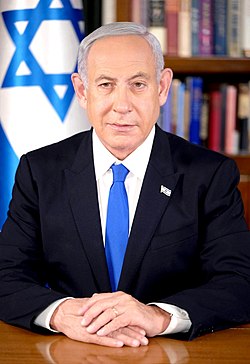 Benjamin Netanyahu
In its own words
National-liberal: security, free markets, sovereignty
How the news describes it
Right-wing; largest party since 2009
 Itamar Ben-Gvir
In its own words
Nationalist-religious; assertive security policy and settlement expansion
How the news describes it
Far-right; ideological heir to the banned Kach movement
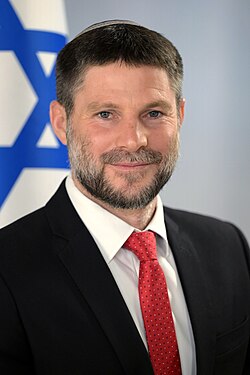 Bezalel Smotrich
 Moshe Feiglin
In its own words
National-religious; "full sovereignty over the Land of Israel"
How the news describes it
Far-right; leading voice for settlements and annexation
 Aryeh Deri
In its own words
Sephardi Haredi party of tradition and Judaism; funding for Torah institutions
How the news describes it
Ultra-Orthodox; pragmatic coalition partner
 Yaakov Asher
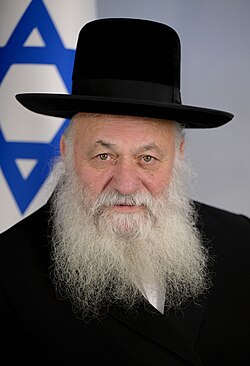 Yitzhak Goldknopf
In its own words
Ashkenazi Haredi alliance for a Torah-observant life
How the news describes it
Ultra-Orthodox; defends military-service exemptions for yeshiva students
 Gadi Eisenkot
In its own words
Centrist and statist; public trust and responsible management
How the news describes it
Centrist, security-minded; led by a former IDF chief of staff
 Naftali Bennett
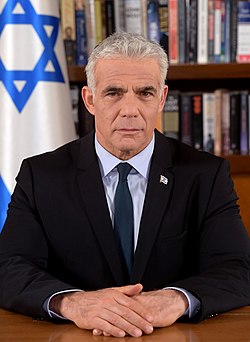 Yair Lapid
In its own words
Zionist unity, protecting democratic institutions, sharing the service burden
How the news describes it
Center to center-right; Bennett's new party and Lapid's Yesh Atid on one list
 Yair Golan
In its own words
Liberal, center-left; a political solution with the Palestinians
How the news describes it
Center-left; merger of Labor and Meretz
 Avigdor Lieberman
In its own words
Secular center-right; "equal conscription" and separation of religion and state
How the news describes it
Secular right-wing nationalist; strongly opposes Haredi exemptions
 Mansour Abbas
In its own words
"A completely civil party"; Arab-Islamic, with Jewish candidates, including former Yesh Atid member Yoav Segalovitz
How the news describes it
Islamist roots, pragmatic; sat in the 2021-22 government
 Yousef Jabareen
With Ahmad Tibi and Sami Abou Shahadeh
In its own words
Hadash: Arab-Jewish socialist. Ta'al: equality for Arab citizens. Balad: Israel as "a state of all its citizens"
How the news describes it
Hadash is left-wing; Balad is Arab nationalist and anti-Zionist
You may notice every leader pictured is a man. Women hold high spots on several lists, including Naama Lazimi (The Democrats) and Orit Strook (Religious Zionism), but none leads a major list this year. The two Haredi parties, Shas and United Torah Judaism, do not run women candidates.
Small parties to watch. These lists are polling near the 3.25% cutoff. If one gets in, it wins about 4 seats; if it misses, its votes are lost.
- Am Yisrael ("People of Israel"), Ofer Winter. New right-wing list of reservists and bereaved families. Some pollsters count it in Netanyahu's camp.
- The Reservists, Yoaz Hendel. Center-right; wants universal military or national service. Won't join without a Haredi draft law.
- Blue and White, Benny Gantz. Security-minded centrist. Polling below the cutoff.
The Arab lists can run. In September the Central Elections Committee voted to bar Ra'am and the Joint List. On October 2, the Supreme Court unanimously overturned those bans. It also reinstated MK Ofer Cassif, 7-2. Balad's leader, Sami Abou Shahadeh, withdrew his own candidacy before the ruling and remains party chair. The committee is made up mostly of party representatives and is chaired by a Supreme Court justice; its decisions can be appealed to the Supreme Court.
What the polls suggest
The polls show a near-tie. Neither side reaches 61 without help.
By camp (61 needed)
The dashed line marks 61 seats.
By list
Average of the latest poll from each of five pollsters, September 21 to October 5, 2026, published by the Middle East Forum.
- Likud and Yashar are neck and neck for the largest party. Kan's September 28 poll had Yashar 23, Likud 21.
- The Arab lists hold about 12 to 13 seats, roughly the gap between either camp and a majority.
- Polls are not predictions. Small lists near the cutoff can shift several seats either way.
- About the source. The Middle East Forum is a U.S. advocacy group. Its averages line up with individual polls from Kan and others, but it's worth comparing with other polling.
Who will sit with whom
The opposition's challenge isn't only numbers. Its leaders disagree about which partners are acceptable. These are campaign positions as of early October, and they can shift once bargaining starts.
- Haredi parties: Longtime partners
- Arab parties: Has not relied on them
- Also: Calls for a "broad national government"
- Haredi parties: Has said he could sit with Shas
- Arab parties: On September 27, said no Arab party currently meets his conditions, "including Mansour Abbas"
- Also: Partners must recognize Hamas as a terror group and Israel as Jewish and democratic
- Haredi parties: Rules them out
- Arab parties: Bennett: "the Arab parties are not Zionist, and therefore we will not rely on them"
- Also: Cut state funding for draft evaders
- Haredi parties: Opposes exemptions
- Arab parties: Openly favors including them
- Also: Supports a two-state outcome; halt annexation
- Haredi parties: No draft exemptions
- Arab parties: Unclear; served in the 2021 government that Ra'am supported
- Also: Wants to be prime minister
On the other side, Shas and United Torah Judaism see Netanyahu as their most reliable partner, even though UTJ left his government in 2025 over the draft. Ra'am wants to join the next government, as it did in 2021.
The bottom line: the opposition likely needs a Haredi party or Arab-party support to reach 61, and Bennett rules out both. About 70% of Jewish Israelis oppose Arab parties in government, according to polling cited by analysts.
Possible outcomes
Three broad outcomes are realistic, and a deadlock is a real possibility.
- Netanyahu returns. Likud would again depend on Shas, United Torah Judaism, Ben-Gvir and Smotrich, perhaps with a small right-wing list. Expect continued pressure for settlement expansion, opposition to a Palestinian state, resistance to drafting Haredi men, and renewed fights over the courts.
- An opposition government. Led by Eisenkot, Bennett, Lapid or another opposition figure. It would likely be more institutionally moderate and more willing to require service from Haredi men. It would not necessarily be a "peace government": most opposition leaders are security-focused and haven't promised a sharp break on Gaza or the West Bank. Reaching 61 could take a Haredi party, outside support from Ra'am, or both.
- No one reaches 61. Netanyahu stays on as caretaker while talks drag on, and Israel could head to another election, as it did five times from 2019 to 2022.
One wild card is Netanyahu's corruption trial. He asked President Herzog for a pardon. In April, Herzog held off deciding and urged both sides to try for a plea deal first. Some analysts think the pardon question could come up in coalition talks, but that is speculation.
Why this election matters
This is the first national vote since October 7, and it will shape questions central to our committee's work.
- Gaza and the West Bank. Whether Israel continues its present military and settlement direction, or moves toward a less expansionist and more internationally coordinated policy.
- Palestinian citizens of Israel. Whether Arab parties can take part meaningfully in national politics and influence who governs.
- Military service. Whether Haredi men keep broad exemptions while secular and national-religious Israelis carry most of the burden.
- Democratic institutions. Whether the next government strengthens judicial independence and oversight, or continues efforts to weaken the Supreme Court and other checks. A related question is whether there will be a state commission of inquiry into October 7.
- Netanyahu's future. Losing power would likely end his time as prime minister and reduce his political leverage, though it wouldn't decide his court case. Winning would strengthen his claim that voters renewed his mandate.
- Israel's place in the world. The next government's choices on Gaza, settlements, courts and Arab citizens will shape relations with the United States, Europe and Arab neighbors.
Sources
Every fact on this page comes from the sources below. Tap to see them all.
Show all 14 sources
How the system works
- The electoral threshold (Knesset; site may be blocked if accessing outside Israel)
- Elections 2026 (Israel Democracy Institute)
- Election timeline and key dates (Jerusalem Post)
Parties and positions
- 120 Project: Israel Elections 2026 (Israel Policy Forum)
- Party platforms in brief (Election Compass 2026)
- The parties, blocs and battles (Jerusalem Post)
- Degel HaTorah names Yaakov Asher chairman (Ynet)
- Eisenkot rules out coalition with Arab parties (AFP)
- Eisenkot's Arab coalition dilemma (Arab Center Washington DC)
- Supreme Court overturns ban on Arab parties (Times of Israel)
- Herzog defers pardon, pushes plea deal (Times of Israel)
Polls
- Israel Election 2026 Poll of Polls (Middle East Forum, a U.S. advocacy group)
- Kan poll, September 28 (Jerusalem Post)
Background
- 2026 Israeli legislative election (Wikipedia; useful for orientation, not a primary source)
Photo credits
All photos via Wikimedia Commons. Photographer and license:
- Benjamin Netanyahu: Avi Ohayon, CC BY-SA 3.0
- Itamar Ben-Gvir: Alon Nuriel, CC BY-SA 3.0
- Bezalel Smotrich: Avi Ohayon, CC BY-SA 3.0
- Moshe Feiglin: Ckaelmi, CC BY-SA 4.0
- Aryeh Deri: Revach Productions, CC BY-SA 3.0
- Yaakov Asher: Yossistinknesset, CC BY-SA 4.0
- Yitzhak Goldknopf: Avi Ohayon, CC BY-SA 3.0
- Gadi Eisenkot: Yahav Trudler, CC BY-SA 3.0
- Naftali Bennett: Avi Ohayon, CC BY-SA 3.0
- Yair Lapid: Avi Ohayon, CC BY-SA 3.0
- Yair Golan: Shlomi Amsalem, CC BY-SA 4.0
- Avigdor Lieberman: U.S. Secretary of Defense, public domain
- Mansour Abbas: U.S. Embassy Jerusalem, CC BY 2.0
- Yousef Jabareen: Amir Deeb, CC BY-SA 4.0

.jpg)

.jpg)


.jpg)

.jpg)
.jpg)

.jpg)
